Is Melbourne water hard?
No. Melbourne mains water is soft — among the softest supplied to any major Australian city, because most of it comes from protected forest catchments rather than groundwater. That is why we will usually talk you out of a softener if you are on mains. If you are on bore water the answer is completely different and worth testing.
How do I know if I actually need one?
We test the hardness. It takes a couple of minutes and it turns the question from an argument into a number. If the number is low, you do not need a softener and we will not quote you one. If it is high, you will see it in the same test and the decision makes itself.
What is the difference between a softener and a filter?
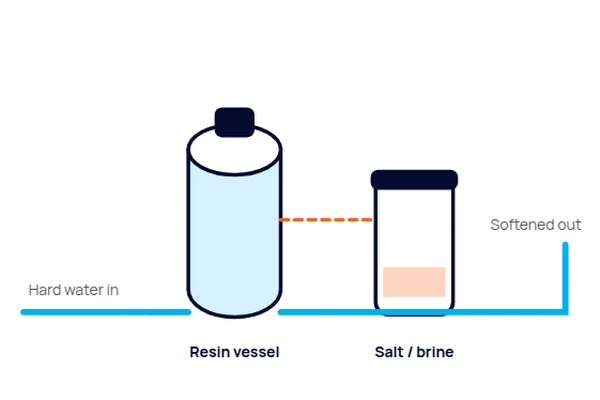
Completely different jobs. A filter physically catches sediment and adsorbs chlorine, taste and odour. A softener chemically swaps hardness minerals for sodium using a resin bed, and it does nothing at all for taste, smell or dirt. Plenty of houses that want a filter get sold a softener, which is one of the reasons this page exists.
How much salt does it use?
It depends on your hardness and your water use, because the unit regenerates on volume as well as time. On a residential unit you are topping up a bag of salt periodically rather than constantly. We will give you a realistic figure for your water at the quote, not a brochure number.
Does a softener waste water?
It uses some, yes. Every regeneration flushes the resin bed and that flush goes to drain. On a properly sized unit set for your actual hardness it is a modest amount, but it is not nothing, and it is one more reason not to fit one where it is not needed.
Can I put a softener on tank water?
You can, but it is rarely the right first move. Rainwater is naturally soft, so hardness is not usually the tank-water problem — sediment, organics and the biological side are, which means filtration and UV. If someone is pitching you a softener for a rainwater tank, ask them what hardness reading they measured.